Friday, 29 June 2012

What is synergy? - promotional packages

Synergy is the interaction or cooperation of two or more organizations, substances, or other agents to produce a combined effect greater than the sum of their separate effects - definition from Google Definitions.

In this post, I will be using the successful film: James Bond Quantum Of Solace as an example of a piece of media which has used synergy in order to create the perfect promotional package. Synergy includes the use of colour, similar type images, common themes etc.
Here is the official poster for James Bond Quantum Of Solace:


Here is an image of a magazine cover featuring James Bond Quantum Of Solace:


Finally, here is a screenshot of the official James Bond Quantum Of Solace trailer:


One aspect which all of the items from the promotional package share, is the similarity in colour scheme between them. They all look very "sandy" due to the golden colours and the slightly washed out effect. All of these items were released before the film, therefore each item gave the audience an insight to what the film might be like. In this case, the colour scheme suggests that a lot of the action will be in a desert or somewhere far out which is not a European country.

Another similarity which is shared between the items is the positioning and the stance of the primary subject. In all, James Bond's body is straight on to the camera, however he is not looking directly into the center. Instead, he is looking at a slight angle at a possible object or thing that the audience cannot see. This makes the audience ask questions about what he is looking at and for what reason. Additionally, this could suggest that he is focused on one particular thing throughout the film and nothing else; a very conventional feature of James Bond films.

Finally, the text used on the magazine cover and on the poster are both very retro and unqiue. Likewise the 'Q' represents "Quantum" which is a key word used in the film; the heavy use of this in a title will make it easy for the audience to remember. This can also be an effective promotional technique as the letter "Q" used in that font will instantly make the viewer/reader think of James Bond. This allows other promotional strategies such teaser trailers to be as brief as possible without actually stating that the film is "James Bond".


Difference between point of view shot and handheld shot

For the horror film trailer, we will need to be versatile with the shots we use as it is important to make the trailer as realisitic as possible. Two shots which could be extremely important are the point of view shot and the handheld shot. These two shots can enhance the overall verismilitude of the trailer if shot correctly and effectivly. Below is the definition for each shot and an example of how the shot could be used:

Point of view shot: A subjective camera angle that becomes the perspective of a character. We look at the world through his or her eyes.


Handheld shot: A shot made without benefit of tripod, dolly, or crane where the camera is held by the operator

Wednesday, 27 June 2012

Shutter Island Promotional Package

Within this post, I will be presenting the analysis of the Promotional Package uses by the film Shutter Island. Promotional packages are important as they create more "hype" for the film and they can make the film far more successful compared to if a promotional package wasn't used.

Film trailer
·         Uses lots of fades for the transitions as this shows a passing of time etc.
·         Quick editing as the trailer progresses which is effective as it makes the trailer tenser.
·         We see a woman with blood on her face for a split second which makes the audience think she is a bad person because we see her for so little time.
·         Images match the sound which enhances the continuity editing of the trailer.
·         Juxtaposition of healthy people and then ill people who have been abused.
·         Alternation between high key lighting and low key lighting.
·         The trailer ends with text, but then unexpected insert surprises the audience.

Magazine cover
·         Very dark and eerie. This gives the image a mysterious appeal which holds many secrets.
·         The binary opposite of the torch and the darkness emphasises the topic.
·         Font is very bold and unique. Shows the film is not like other horror films.

Poster
·         Very dark and only man’s face can be seen by the flame light.
·         Shutter Island is shown just below which acts as an establishing image.
·         The red text stands out which has been purposely done as it is important.

Website
·         Again very dark, however red text shows the importance of certain features.
·         Multimedia has been used (trailer and roll over links) to give the user as much accessibility as possible.
·         The site follows a particular colour scheme as it needs to look as professional as possible.

Sub genres in the genre horror

Within the genre of horror, there are many different sub genres which make the films what they are. Below is a list of these sub genres which have been implemented in many horror films in the past.

· Action horror - Dawn of the Dead
· Body horror - The Thing
· Comedy horror - Scary movie
· Gothic horror - The Woman in Black
· Natural horror - Jaws
· Physcological horror - Hannibal
· Science fiction horror - Apollo 18
· Slasher horror - A Nightmare on Elm Street
· Splatter horror - Saw
· Zombie horror - I am Legend
As you can see, there are a number of different "hybrid" horror films which use these different sub-genres in order to create different effects. Slasher horror films are usually very bloody and gory, while physcological horrors make the audience think about the situation and can sometimes be more scary than other hybrids. The group I am working with are thinking of doing a horror which uses the sub-genre of pandemic. This will allow other sub-genres such as action, zombie and possible natural. Using these three different sub-genres will allow the film trailer to be both successful and versatile.

Tuesday, 26 June 2012

Difference between teaser trailer and theatrical trailer

A teaser trailer and a theatrical trailer are two very different types of trailers. Within this post, I will provide you with a definition for each and the types of things to expect.

Teaser trailer
A teaser trailer, or just teaser, is a short trailer used to advertise an upcoming film, television program, video game, or product.

Theatrical trailer
A trailer or preview is an advertisement for a feature film that will be exhibited in the future at a cinema, on whose screen they are shown. The term "trailer" comes from their having originally been shown at the end of a feature film screening.

Teaser trailers are usually only 40s-1.20, whereas theatrical trailers can be 2.00m+. This is a very big difference which is why the features found in both trailers are very different. Teaser trailers sully only show a few parts of the film or sometimes nothing from the film and just voiceover. Theatrical trailers usually allow the audience to understand the narrative and the types of characters which should be expected (generically speaking). Additionally, we usually see more special effects, a wider range of mise-en-scene, and more information about when the film will be released and by what media conglomerate. 

What is the 180 degree rule?

To be able to frame a shot using the 180 degree rule
·         180 degree rule
·         Shot/reverse shot
·         Match on action
·         Continuity
Definition of the 180 degree rule:
The 180° rule is a basic guideline in film making that states that two characters (or other elements) in the same scene should always have the same left/right relationship to each other. If the camera passes over the imaginary axis connecting the two subjects, it is called crossing the line.

180 degree rule: Always film from one side. Camera can move anywhere in the “circle” but it cannot pass the “line” as it will be filming the back of the viewers heads. This can also confuse the audience as in one shot someone will be facing one direction, and in another they will be facing the opposite direction.

Shot/reverse shot
Camera is behind one persons shoulder. When the other speaks or shows emotion, the camera moves to that persons shoulder in order to show interaction between the two or more people.

Friday, 22 June 2012

Teaser trailer vs theatrical trailer (Cloverfield)


Within this post, I will be presenting the notes I made in a media lesson where we watched the teaser and theatrical trailer for the film Cloverfield. After watching the two trailers, myself and the other people who will be in my group when we create a horror trailer. learned some valuable features which may make our trailer more professional and more believable. 

Teaser trailer
There are lots of handheld shots as well as lots of dialogue. This simple yet effective mix of features is effective as it makes the film look more real and much more believable. It also allows the viewer to see what it would be like in such a scenario which in some ways acts as a form of escapism. The sound is also effectively used in the likes of interruptions of the visuals. There are some moments within the trailer where the sound appears to malfunction almost like a TV where you put the wrong connection in. This is a clever idea (especially for our trailer) as it acts as a discourse marker. This allows opportunities to move onto other areas within the film. 

Theatrical trailer
In this trailer, the editing has been used to the trailers advantage as it has been synchronised to the images the viewer can see on the screen. This sound includes both enhanced diagetic sound and enhanced non-diagetic sound. This is good as it builds up suspense and allows unexpected objects to appear (non-diagetic insert). There is also the mix between calm and relaxed sound, and hectic and violent sound. The juxtaposition of these two features makes the film more dramatic and more unpredictable. 

Similarities 
Both include a television which is set on the news channel (a conventional feature of horror films which could be very effective in our horror trailer). Enhanced non-diagetic sound which is very unpredictable therefore making the audiences' reactions emphasised. A release date is shown at the end of both trailers which is vital for a trailer because this is a fact which the audience need to know. Finally, the mise-en-scene in both trailers is very dramatic and could be seen as 'over the top'. Although this is the case, the mise-en-scene is still very believable due to the context it is used in.


Teaser trailer vs theatrical trailer (Blair Witch Project)

Last lesson, we analysed the difference between the Blair Witch teaser trailer, and the Blair Witch theatrical trailer.


Media lesson - re-creating a John Lewis advert

In this post, I will be explaining what we did in a media lesson, where we were able to use video cameras. We were given a brief to re-create the famous Christmas John Lewis advert 2008 (http://www.youtube.com/watch?v=dSB0wv5SPN0). After watching the advert, we had to get into groups and film in a similar way to the adverts style of filming. Unfortunately, the camera we were using was broken, however after watching the other groups attempt; I did learn some important features of such an advert.

The advert must:
1.      be relevant to the topic
2.      take in to account the rule of thirds, but also use a centre straight shot if needed
3.      make sure that the camera is as steady as possible as shake will reduce the professionalism of the advert
4.      the sound should be perfectly synced to the images for full effect
5.      lighting must be correct for the best image. Too dark makes it difficult to see, and too light can make the advert look very superficial (which may be wanted in some cases)
I believe that if we get the chance to do this type of task again, I will definitely take these rules in to account as they are vital for a successful advert.  

Narrative and characterisation in “Chernobyl diaries” and “The Cabin in the Woods”

Within this post, I will be analysing how the horror film trialers "Chernobyl diaries" and "The Cabin in the Woods" use narrative and charcateriisation and what effect this has on the audience.

Looking for: Narrative (order in which events appear)
                    Characters (the type of characters that appear)

Chernobyl diaries - http://www.youtube.com/watch?v=ygmVZaYgbn8 (trailer link)
Characters: The villain – the unknown creatures trying to hunt the humans
                    The donor – possibly the Ukrainian who has all of the equipment
                    The princess/prize – the woman who appears to be vulnerable and weak
                    The hero/seeker – no obvious hero as they all get same amount of screen time
                 
Narrative:    Equilibrium – Beginning where they are having a conversation at the table
                    Incident – Travel to Ukraine and find a horrible discovery
                    Disequilibrium – Creatures hunt the group and they try to fight back and escape
                    Resolution – N/A
                    New equilibrium – N/A

The Cabin in the Woods - http://www.youtube.com/watch?v=7ENUBUdFswM (trailer link)
Characters: Villian – man with the strange eyes who appears devious when speaking
                    The hero/seeker – possibly man who drives car as he gets most screen time as helps
                    Other features – don’t really fit the categories which shows they are breaking maxims

Narrative: Equilibrium – Beginning they are all travelling in car having fun and laughing      
                  Incident – Find the cabin and strange things start to happen
                  Disequilibrium – They realise they are trying to be killed and try to escape the area
                  Resolution – N/A
                  New equilibrium – N/A        

After analysing the trailers, I have identified that the characters and narratives the two films use are very similar to the theories created by Tzvetan Todorov and Vladimir Propp. The Cabin in the Woods is slightly more unique than Chernobyl diaries in the sense that it only uses a few features which are shown in the theories. A major aspect which highlights the significance of film trailers is the need to just show the equilibrium, incident, and disequilibrium. It is very rare that film trailers will show the resolution and the new equilibrium as trailers are supposed to create anticipation and the need to go and want to see it. If the whole narrative was included, people wouldn’t want to see the film as they know the story.           

Thursday, 21 June 2012

Tzvetan Todorov - Theorist - Narrative

Tzvetan Todorov – 1939 – N/A
File:Tzvetan Todorov-Strasbourg 2011 (3).jpgIs a Franco-Bulgarian philosopher who has lived in France since 1963. He has written many books, theories and culture history which have helped him with some of his discoveries and findings.  Todorov has published a total of 21 books which have won various awards and nominations. Below is the narrative he created which outlines the conventional plot for many films in the past and in the present.
This simple, yet clear method of seeing how a film is structured is very important when explaining the narrative structure. In some ways, he has used a very systematic approach to such stories and his findings appeared to be very mathematical.  To outline his narrative: Equilibrium, inciting incident, disequilibrium, resolution and new equilibrium.

Vladimir Propp - Theorist - Character

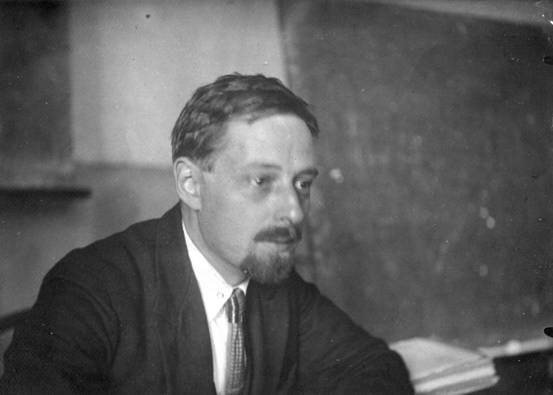
Vladimir Propp - 1895 - 1970
A media theorist who researched and developed the way in which characters are categorised and how they are portrayed in media texts. He was also a Russian Soviet formalist scholar who analysed basic plot components of Russian folk tales.
After studying the comparison between characters in 100 different tales, he devised a method of highlighting who they were and the category of person they fell into. There are 8 different categories which are:
  1. File:Vladimir Propp (1928 year).jpgThe villain — struggles against the hero.
  2. The dispatcher —character who makes the lack known and sends the hero off.
  3. The (magical) helper — helps the hero in the quest.
  4. The princess or prize — the hero deserves her throughout the story but is unable to marry her because of an unfair evil, usually because of the villain. the hero's journey is often ended when he marries the princess, thereby beating the villain.
  5. Her father — gives the task to the hero, identifies the false hero, marries the hero, often sought for during the narrative. Propp noted that functionally, the princess and the father cannot be clearly distinguished.
  6. The donor —prepares the hero or gives the hero some magical object.
  7. The hero or victim/seeker hero — reacts to the donor, weds the princess.
  8. False hero — takes credit for the hero’s actions or tries to marry the princess
These roles can usually be distributed between different characters and some may even fall into the hybrid category, where they are used in 2 or more roles. Although this list of roles appears to be very 'solid' and reliable, many have still criticized the list due to the disregard of verbal considerations and that the list is focused too much on the roles of different characters.

Tuesday, 19 June 2012

Media key term reflection

In this post, I will be presenting the notes we made in our last media lesson about the importance of composition and positioning when filming and taking still images.

Rule of thirds
Where the view finder is split into thirds and the subject is placed in one of two cross-overs. This technique makes the composition look both professional and appealing. It is also easier on the eye.


Leading lines
This is where naturalistic lines in an image direct the viewer’s eyes to a specific object or subject.
Curvy lines:
Creates a smooth and soft mood to the image.
Diagonal lines:
Creates an action/imbalance/insecurity mood to the image.
Vertical lines:
Creates a dignity/strength/power mood to the image.
Horizontal lines:
Creates a serenity/calm/consistency mood to the image.


Balance
Symmetrical = Creates a formal appearance.
Asymmetrical = Creates an informal appearance and may suggest a creative, dynamic, or more exciting mood.